
“July Declaration Imminent: Constitution May Be Suspended, Major Changes Expected in Government”
📍 StvGlobal24 News Desk | July 1, 2025 | Dhaka
Bangladesh may soon witness a defining political moment as sources indicate that a historic “July Declaration” could be announced within days. This long-anticipated declaration is expected to include the suspension of the current Constitution and a significant transformation in the country’s top leadership, particularly the Presidency and central administration.
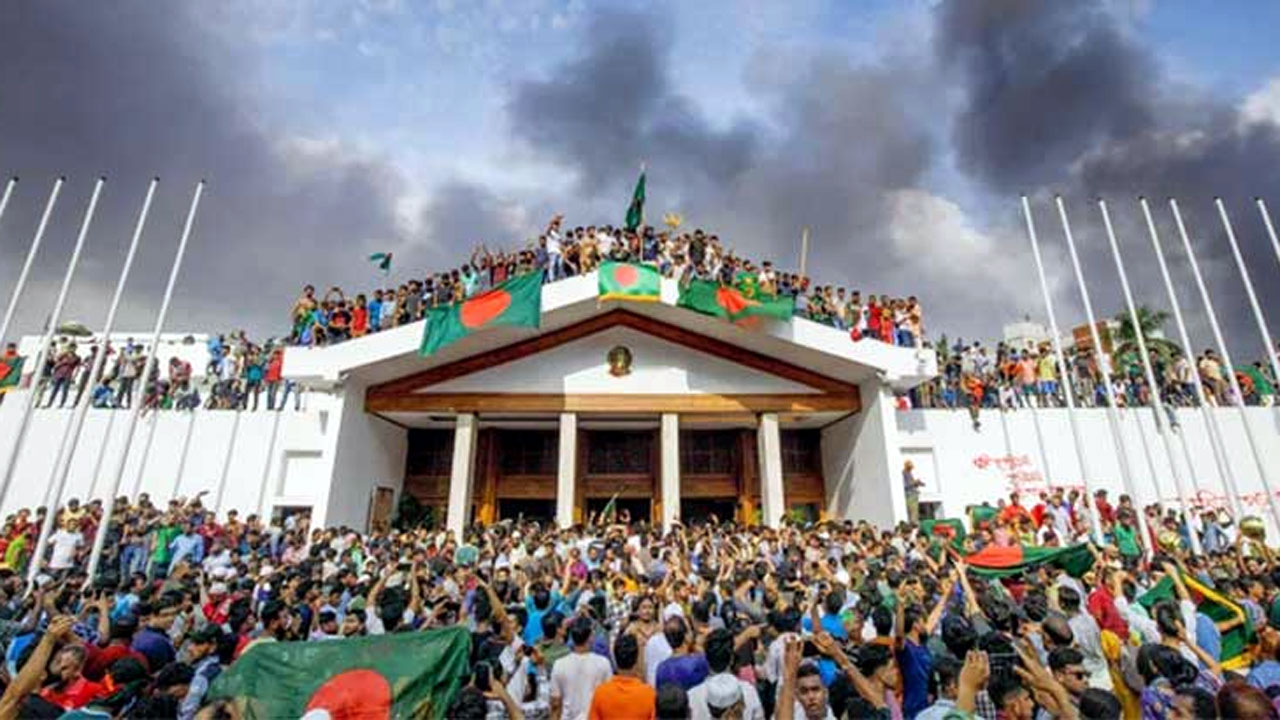
This possible development follows the August 5, 2024 mass uprising, led primarily by students and supported by broad segments of civil society, demanding an end to systemic political repression and authoritarian rule. Although the uprising forced the resignation and exile of former Prime Minister Sheikh Hasina, fundamental structural changes were delayed—something now seen by many as a missed opportunity.
🔺 Constitution Suspension: Legal Challenge or Popular Necessity?
According to members of the Constitution Reform Commission, including Imran Abdullah Siddiq, the existing Constitution has become a major obstacle to state reform. Siddiq argues that the immediate post-uprising period in 2024 was an opportune moment to suspend the Constitution and establish a revolutionary or national consensus government.
“We are still following the Constitution, but sovereignty ultimately belongs to the people. Like in Syria, after the fall of the Assad regime, a revolutionary government suspended the Constitution and rebuilt the system. That precedent applies here too.”
Siddiq believes the mass uprising gave the people an extraordinary mandate that can override conventional legal frameworks when the demand is for democratic restoration.
🔁 Possible Reshuffle in Government: Presidential Scenarios
Sources close to government and diplomatic circles report that current President Md. Shahabuddin Chuppu, appointed to maintain constitutional continuity after the 2024 uprising, may step down soon.
Two key scenarios are under consideration:
- Scenario 1:
Dr. Muhammad Yunus, Nobel Laureate and globally respected economist, may be appointed interim President. In this setup, Tarique Rahman, Acting Chairman of BNP (Bangladesh Nationalist Party), would serve as Chief Advisor, and Dr. Shafiqur Rahman, Ameer of Jamaat-e-Islami, as Deputy Chief Advisor. Additional advisors would be drawn from various pro-democracy parties and the civil society, including some performers from the current advisory council. - Scenario 2:
Former Prime Minister and BNP Chairperson Begum Khaleda Zia may assume the role of President. In this case, the advisory council would still feature representatives from BNP, Jamaat, Jatiya Party, Gono Forum, and other smaller parties, with a mix of new and retained advisors.
🛡️ Why Suspend the Constitution?
Analysts point out several reasons why suspending the Constitution may now be essential:
- Bureaucratic inertia: Many key state institutions, including the Secretariat and NBR (National Board of Revenue), are still operating under the old authoritarian administrative framework.
- Symbolic holdover: President Shahabuddin Chuppu, a figure from the previous regime, has failed to bring tangible change despite remaining in office for the sake of continuity.
- Delayed reforms: The much-anticipated “July Charter”, a declaration of post-revolution goals and principles, remains unannounced due to political gridlock.
- Political ambiguity: No consensus yet among major parties about the nature of reforms and roadmap to elections.
- Security threats: Intelligence reports reveal that remnants of the previous regime are allegedly involved in subversive activities and destabilization attempts.
🗳️ Elections & The Path Forward
The interim government leadership has repeatedly assured that the next election will be free, fair, and historic in transparency. However, insiders say suspending the Constitution may be the only realistic path toward establishing a neutral political environment for credible elections.
It’s also reported that Dr. Yunus, frustrated with internal disagreements, had once hinted at resignation. His statement was interpreted as a veiled threat, intensifying pressure on all stakeholders to unite behind constitutional suspension and reform.
🛑 The Shadow of Fascism Still Lingers
Although nearly a year has passed since the July Revolution, the bureaucratic and political residues of the fascist era have not been fully dismantled. Sources claim that despite an interim government, real power dynamics remain unchanged in many state offices.
Some even argue that without suspending the 1972 Constitution—amended multiple times under authoritarian influence—true reform is impossible. Politicians and civil society figures increasingly view this as an open secret in Dhaka’s political circles.
📜 The Delayed “July Charter” and Its Urgency
The “July Charter,” a revolutionary framework expected to outline the core objectives of the 2024 uprising, remains unformulated due to a lack of unity among political stakeholders. However, the upcoming July Declaration is expected to include:
- Formal suspension of the current Constitution
- Formation of a National Consensus Government
- Initiation of drafting a new democratic Constitution
- Timetable for transparent general elections
🔚 Conclusion
July 2025 could mark the beginning of a new era in Bangladesh’s political journey. If realized, the July Declaration would symbolize the closure of a painful authoritarian chapter and the dawn of a consensus-driven democratic transition.
Whether it is Khaleda Zia or Dr. Muhammad Yunus who assumes the Presidency, the core demand remains the same: a truly representative, reformed, and accountable government that reflects the spirit of the 2024 people’s uprising.
The nation, and indeed the world, watches as Bangladesh stands on the threshold of historic change.
📅 Published: July 1, 2025


